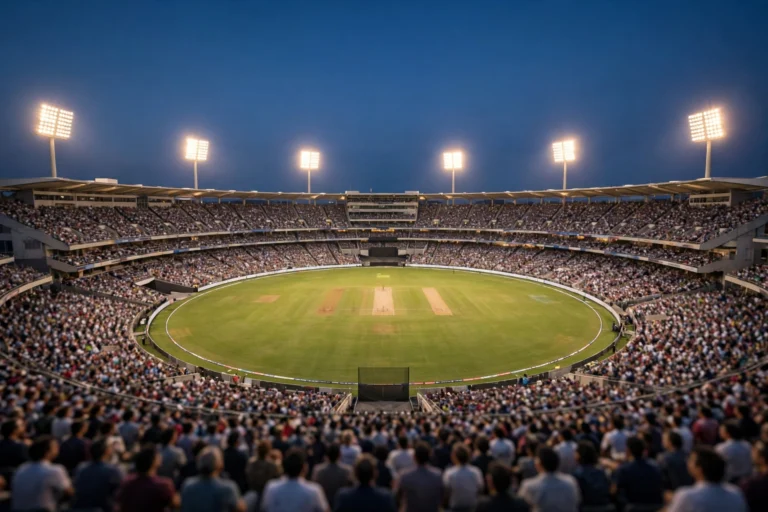
Cricket World Cup 2027: How Qualification Works and Why Ticket Demand Is So High
The 2027 ICC Men’s Cricket World Cup is still a year away, yet it is already breaking records. When the ticket ballot opened on 1 October 2026, more than one million ticket applications were submitted in the opening weekend. Within twelve days, that figure had risen to more than fifteen million applications, from fans in 142 countries. For a tournament that does not start until October 2027, that level of demand is remarkable, and it tells us a great deal about how big the World Cup has become.
At the same time, many fans are confused about how teams qualify for the tournament. The 2027 World Cup will have fourteen teams, up from ten in 2023, and the qualification system is more complex than it used to be. This article explains, in simple terms, how qualification works, who is already in, who still has to earn a place, and why ticket demand is so high.
The basic facts: when, where and how many teams
The 2027 World Cup will be held from 2 October to 21 November 2027, across South Africa, Zimbabwe and Namibia. It will feature fourteen teams and fifty-seven matches. The final is scheduled for 21 November 2027 at the Wanderers in Johannesburg.
This will be the first time a men’s World Cup has been held in Africa since 2003, when South Africa, Zimbabwe and Kenya hosted the tournament. African cricket has grown a great deal since then, and the ICC has described the tournament as Africa’s moment to shine, with a global audience of more than two billion fans across more than 120 countries.
How the remaining four places are decided
Four places remain, and they will be decided through the Cricket World Cup Qualifier, a ten-team tournament scheduled from 26 February to 21 March 2027 in South Africa and Namibia. The qualifier will feature teams that did not qualify directly, including teams from the Cricket World Cup League 2 and the Qualifier Play-off, along with lower-ranked teams that missed direct qualification.
In the new system, the winner of the qualifier will go straight into the second round of the World Cup, while the other three qualifying teams will enter the first round, known as the Super Series, to decide the final place in the second round. The exact format has been debated, and some associate teams have raised concerns about late changes, but the broad picture is clear: four teams will come through the qualifier, and ten teams are already in.
For fans of associate cricket, the qualifier is a tournament in its own right. It gives teams such as Scotland, the Netherlands, the United States and Oman a chance to reach the World Cup, and it gives their players a stage that they do not often get. For bigger teams, the qualifier is a reminder that direct qualification is not guaranteed forever. Rankings change, and a team that slips can find itself having to qualify the hard way.
Why ticket demand is so high
Ticket demand is high for several reasons, and the numbers show it clearly. In the opening weekend of the ballot, more than 320,000 fans registered and submitted applications for more than 1.1 million tickets. The India versus Pakistan match on 10 October attracted more than 110,000 applications alone, making it the most in-demand fixture. South Africa versus India attracted more than 92,000 applications, and India versus Australia attracted more than 86,000.
There are several reasons for this demand. First, the World Cup is the biggest event in one-day cricket, and it only happens every four years. Fans plan trips around it years in advance. Second, the tournament is in Africa for the first time in more than two decades, which makes it a destination event, not just a cricket event. Third, the expanded fourteen-team format means more matches, more rivalries and more chances to see a favourite team. Fourth, the ballot system itself creates urgency, because fans know demand will exceed supply for the biggest matches.
The ICC has also made the ballot free to enter, with no payment required at the point of registration. That lowers the barrier for fans who want to try for tickets, even if they are not sure yet whether they can travel. The ballot remained open until 21 November 2026, exactly a year before the final, which gave fans a clear deadline and a reason to act.
Conclusion
Qualification for the 2027 World Cup is now largely settled, with ten teams already in and four places to be decided through the qualifier in February and March 2027. South Africa and Zimbabwe qualify as hosts, eight teams qualify through the rankings, and Namibia, despite being a co-host, must qualify like everyone else. That system is complex, but it is also fair: it rewards consistent performance, while still giving smaller teams a route to the biggest stage. Ticket demand, meanwhile, shows that the World Cup remains a global event of enormous appeal. More than fifteen million applications in twelve days is not just a number. It is a sign that fans across 142 countries want to be part of a tournament that returns to Africa after more than twenty years.
Frequently asked questions
How many teams will play in the 2027 Cricket World Cup?
Fourteen teams. Ten have already qualified directly, and four more will come through the Cricket World Cup Qualifier in February and March 2027.
Who has already qualified for the 2027 World Cup?
South Africa and Zimbabwe as Full Member hosts, plus India, New Zealand, Pakistan, Australia, England, Sri Lanka, Afghanistan and Bangladesh through the ICC ODI rankings.
Why does Namibia not qualify automatically as a co-host?
Because automatic host qualification applies only to Full Member hosts. Namibia is a co-host, but not a Full Member, so it must earn its place through the qualification pathway.